The Evolution of Web Development: From Static Sites to AI Automation
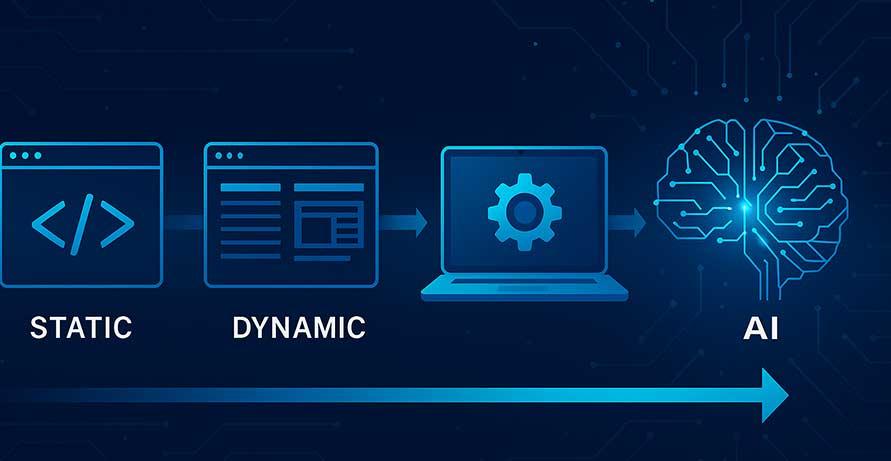
Web development has changed dramatically over the last three decades. What started as simple HTML pages has evolved into intelligent, AI-powered web platforms.
In 2025, websites are no longer just information pages. They automate workflows, personalize content, and predict user behavior.
This article explores how web development evolved from static sites to AI automation. You will also see how Anchor Points helps businesses build scalable, future-ready web ecosystems.
The Early Web: Static HTML Websites
In the early 1990s, websites were static. Developers manually coded pages using HTML.
Key Features of Static Websites
- Built with HTML and basic CSS
- No database connectivity
- Manual updates for every change
- Limited interactivity
Static websites worked like online brochures. They were simple and fast but difficult to scale.
Every content update required developer involvement. This slowed business growth.
The Rise of Dynamic Websites and CMS Platforms
The next phase introduced server-side scripting and databases. Technologies such as PHP and MySQL enabled dynamic content.
Content Management Systems like:
- Drupal
- WordPress
- Joomla
allowed non-technical users to update websites easily.
What Changed in This Era
- Database-driven content
- User login systems
- Admin dashboards
- E-commerce capabilities
- Reusable templates
This phase transformed websites into interactive platforms.
How Anchor Points Helps
We modernize legacy CMS platforms with improved performance, security, and SEO optimization.
The JavaScript Revolution and Web Applications
Around 2010, users expected faster and more interactive websites.
JavaScript frameworks such as:
- React
- Angular
- Vue.js
made it possible to build application-like experiences.
Major Innovations
- Single Page Applications
- Real-time updates
- API integrations
- Progressive Web Apps
- Headless CMS architecture
Websites became interactive systems rather than static pages.
How Anchor Points Helps
We develop headless web applications using modern frameworks to deliver high speed and scalable performance.
The Cloud Era and Scalable Development
As traffic increased, traditional hosting struggled.
Cloud platforms such as:
- Amazon Web Services
- Google Cloud
- Microsoft Azure
enabled automatic scaling and better performance.
Cloud Innovations
- Serverless computing
- Continuous deployment pipelines
- Microservices architecture
- Global CDNs
Cloud computing made web applications more resilient and scalable.
Mobile-First and Responsive Design
Mobile usage surpassed desktop traffic. This changed design priorities.
Google introduced mobile-first indexing. Websites had to adapt.
Key Mobile-First Principles
- Responsive layouts
- Touch-friendly interfaces
- Optimized loading speeds
- Simplified navigation
Businesses that ignored mobile optimization lost search visibility and conversions.
AI and Automation in Modern Web Development
Artificial intelligence now plays a central role in web development.
AI tools assist with:
- Code generation
- Automated testing
- Personalized recommendations
- Smart chatbots
- Predictive analytics
- Content automation
AI-powered systems analyze user behavior and optimize performance automatically.
Examples include:
- AI-driven product recommendations
- Automated SEO suggestions
- Predictive performance monitoring
- Intelligent UX personalization
Websites are becoming adaptive systems.
How Anchor Points Helps
We integrate AI-powered chatbots, personalization engines, predictive analytics, and automation workflows into modern web platforms.
Timeline: From Static to Intelligent Web
Web development evolved through clear phases:
- Static HTML pages in the 1990s
- Dynamic CMS platforms in the 2000s
- JavaScript web applications around 2010
- Cloud-native development in the mid-2010s
- AI-driven automation in 2025
Each phase improved speed, scalability, and intelligence.
Business Benefits of Modern Web Development
Modern websites function as digital growth engines.
Key advantages include:
- Automated workflows
- Faster deployment cycles
- AI-driven personalization
- Real-time analytics
- Scalable infrastructure
- Improved ROI
Web development today focuses on building intelligent systems, not just webpages.
The Next Phase: Autonomous Web Experiences
The next step is autonomous web management.
Emerging trends include:
- AI-driven A/B testing
- Adaptive layouts
- Self-optimizing content
- Automated performance tuning
Websites will soon adjust content, layout, and SEO automatically based on data insights.
How Anchor Points Builds Future-Ready Web Ecosystems
Anchor Points combines:
- Headless architecture
- AI automation
- Cloud scalability
- Performance engineering
- UX optimization
We help businesses transform outdated websites into intelligent digital platforms.
If you want to modernize your web presence, our team provides strategy, development, and ongoing optimization support.
Final Takeaways
The evolution of web development shows a clear shift from static information pages to intelligent, automated platforms.
Today’s web:
- Learns from user behavior
- Automates workflows
- Scales instantly
- Personalizes experiences
Businesses that adopt AI-driven web development gain a competitive advantage.
Ready to take your website from static to smart? Contact Anchor Points to build an AI-ready digital platform.
FAQs
Q1. What is AI automation in web development?
It uses artificial intelligence to automate coding, testing, personalization, and performance optimization.
Q2. Will AI replace web developers?
No. AI improves efficiency but still requires human creativity and strategic oversight.
Q3. What technologies power modern web development?
Frameworks like React, cloud platforms, APIs, and AI-driven tools power today’s scalable web systems.
Q4. Why is cloud infrastructure important for modern websites?
It allows automatic scaling, better security, and high performance during traffic spikes.
Q5. How can businesses modernize legacy websites?
By migrating to cloud hosting, adopting headless CMS architecture, and integrating AI tools for automation and analytics.