Web Application Services Explained: What Businesses Actually Need in 2026
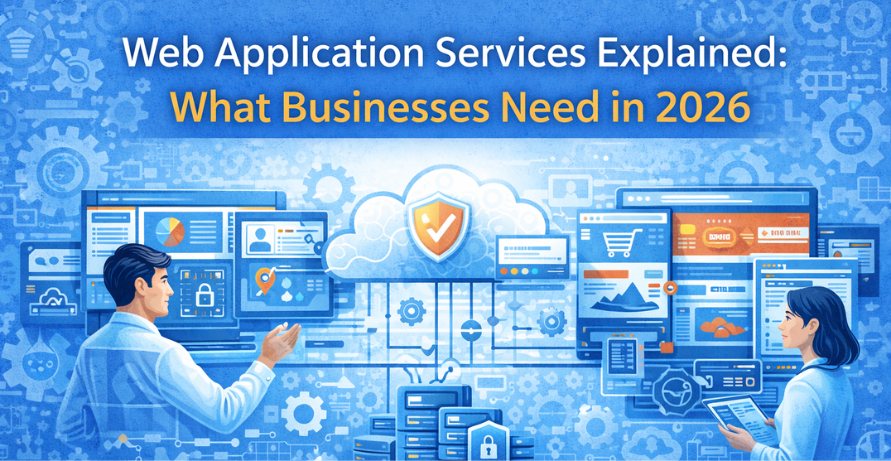
Web applications are essential to modern business operations. They power internal dashboards, workflow automation systems, customer portals, SaaS platforms, and enterprise ecosystems.
In 2026, businesses expect more than just functional software. They need scalable, secure, and integrated web applications that support long-term growth. Yet many companies invest in web application services without clearly defining their needs. This often leads to overbuilt systems, poor integrations, or platforms that fail to scale.
This guide explains web application services in practical terms. It outlines what businesses truly need, how enterprise and custom solutions differ, and how to align technology investments with business goals.
What Are Web Application Services?
Web application services include the strategy, design, development, deployment, and ongoing maintenance of browser-based applications.
Unlike generic software tools, professional web application services are tailored to specific business workflows and operational requirements.
Strong web application services focus on four fundamentals:
- Alignment with business objectives
- Scalable architecture
- Seamless system integration
- Enterprise-grade security
When executed correctly, these services turn web applications into long-term strategic assets.
Core Components of Professional Web Application Services
Strategy and Architecture Planning
Every successful application begins with strategy.
This stage defines:
- Business objectives
- User roles and workflows
- Performance expectations
- Security requirements
- Technology stack
- Cloud infrastructure decisions
Poor architectural planning leads to scalability issues and costly rework. Strong foundations prevent future limitations.
UI and UX Design for Business Applications
User experience directly impacts productivity and adoption.
Effective UI and UX design:
- Simplifies workflows
- Reduces training time
- Minimizes user errors
- Improves engagement
Business applications must prioritize clarity and efficiency over visual complexity.
Custom Development and System Integration
Development includes:
- Front-end engineering
- Back-end development
- Database architecture
- API development
Integration is critical. Modern web applications must connect with:
- ERP systems
- CRM platforms
- Payment gateways
- Accounting tools
- Third-party APIs
Without proper integration, data silos emerge and operational efficiency declines.
Deployment, Performance, and Security
Deployment decisions influence reliability and scalability.
Modern web applications often use:
- Cloud-native infrastructure
- Serverless environments
- Microservices architecture
Performance optimization ensures fast load times and responsiveness. Security implementation includes encryption, access control, compliance monitoring, and threat detection.
In 2026, security is not optional. It is foundational.
Maintenance and Continuous Support
Web applications require continuous improvement.
Ongoing services include:
- Security updates
- Performance optimization
- Bug fixes
- Feature enhancements
- Infrastructure monitoring
Reliable maintenance ensures long-term stability and ROI.
Enterprise Web Application Services: Why Scale Matters
Enterprise web application services are designed for organizations with:
- Large user bases
- Complex workflows
- High data volumes
- Regulatory requirements
These applications require advanced architecture, strict security controls, and deep system integration.
Without enterprise-level planning, systems often face:
- Performance bottlenecks
- Data inconsistencies
- Integration failures
- Compliance risks
Industries like healthcare, finance, logistics, and SaaS rely heavily on enterprise-grade web applications.
Custom Web Application Services vs Ready-Made Platforms
Businesses often choose between custom development and off-the-shelf software.
Ready-Made Platforms
Advantages:
- Faster deployment
- Lower upfront cost
Limitations:
- Limited flexibility
- Restricted integrations
- Scalability constraints
Custom Web Application Services
Advantages:
- Full control over workflows
- Deep integrations
- Long-term scalability
- Competitive differentiation
Custom solutions require higher initial investment but provide stronger long-term value.
Cost Considerations and ROI
Web application services involve both initial and ongoing investment.
Upfront costs include:
- Design
- Development
- Testing
- Deployment
Ongoing costs include:
- Hosting
- Monitoring
- Maintenance
- Updates
The real return on investment comes from:
- Increased operational efficiency
- Reduced manual processes
- Improved data visibility
- Better customer experience
- Faster decision-making
Well-architected web applications generate measurable long-term value.
Decision Guide: Choosing the Right Web Application Services
Before selecting a provider, businesses should clarify:
- What specific problem will this application solve?
- Who are the primary users?
- How must the system scale?
- What integrations are required?
- What compliance standards apply?
Clear answers reduce risk and prevent misaligned investments.
How Anchor Points Can Help
At Anchor Points, web application services are delivered as long-term business solutions.
We provide:
- Strategic discovery and architecture planning
- Custom Web Application Development
- API-first and scalable system design
- Secure cloud-native deployment
- DevOps monitoring and ongoing optimization
Our approach ensures that every application aligns with business goals, integrates seamlessly, and scales confidently.
Whether you need enterprise platforms or custom workflow automation, Anchor Points builds secure and future-ready systems designed for growth.
Final Thoughts
Web application services in 2026 are about strategy, scalability, and sustainability.
Businesses that invest in well-architected, secure, and integrated applications gain operational efficiency and competitive advantage.
Understanding service components, enterprise requirements, and customization options helps organizations make informed decisions and maximize technology investments.
Frequently Asked Questions
What are web application services?
Web application services include planning, designing, developing, deploying, and maintaining browser-based software applications tailored to business needs.
Are enterprise web applications necessary for every company?
Not always. Smaller businesses may benefit from custom solutions without requiring full enterprise complexity.
How long does custom web application development take?
Simple applications may take three to four months. Enterprise platforms often require six to twelve months depending on scope.
Can existing tools be converted into custom web applications?
Yes. Many organizations transition from off-the-shelf platforms to custom applications to improve scalability and integration.