Software Risk Management in 2026: How Enterprises Prevent Costly Failures
In 2026, software supports nearly every enterprise function, from internal systems to customer-facing platforms. As reliance on digital systems increases, so does exposure to risk. A single failure can disrupt operations, damage reputation, and create regulatory consequences.
Software risk management helps enterprises identify threats early, reduce uncertainty, and protect long-term business value. When done correctly, it strengthens resilience and supports sustainable growth.
What Is Software Risk Management
Software risk management is a structured process for identifying, evaluating, mitigating, and monitoring risks that may impact software systems or projects.
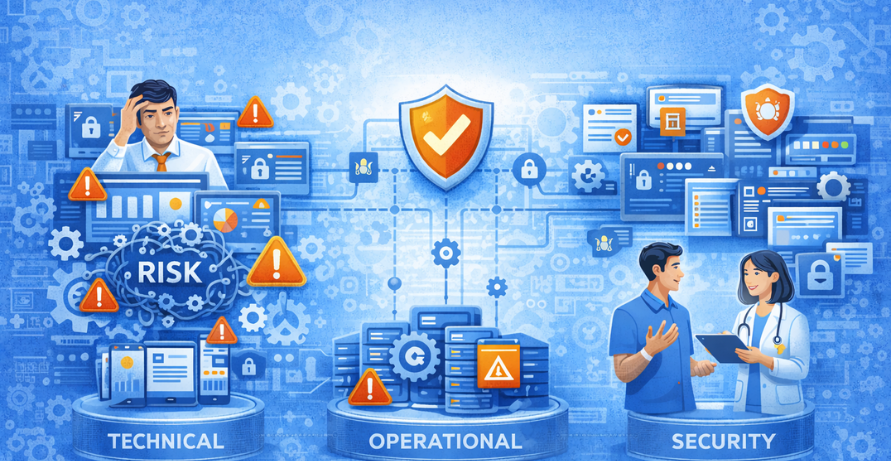
Risks typically fall into four categories:
- Technical risks such as scalability limits or architectural flaws
- Operational risks such as unclear requirements or skill gaps
- Security risks such as data breaches or vulnerabilities
- Strategic risks when software drifts away from business objectives
A structured approach reduces uncertainty and improves decision-making across the software lifecycle.
Core Steps in Software Project Risk Management
Risk Identification
The first step is identifying potential risks early.
Common enterprise risk sources include:
- Legacy systems and outdated platforms
- Complex third-party integrations
- Distributed teams and unclear ownership
- Evolving compliance requirements
- Shifting business priorities
Architecture reviews, risk workshops, and cross-functional collaboration help uncover hidden risks before they escalate.
Risk Assessment and Prioritization
After identification, risks must be evaluated based on:
- Likelihood of occurrence
- Potential business impact
- Regulatory or security exposure
- Operational disruption
Even low-probability risks can be critical if they affect core systems or sensitive data. Prioritization ensures teams focus on high-impact threats first.
Risk Mitigation Planning
Mitigation strategies aim to prevent failures before they occur.
Common mitigation strategies include:
- Scalable and modular architecture design
- Automated testing and performance validation
- Clear governance models and role accountability
- Secure development practices and threat modeling
- Capacity planning and infrastructure validation
Mitigation must evolve as systems scale and business needs change.
Monitoring and Continuous Reporting
Risk management does not stop at deployment.
Enterprises rely on:
- System health dashboards
- Security monitoring tools
- Regular compliance reviews
- Transparent reporting across stakeholders
Continuous visibility enables faster response and long-term stability.
Enterprise Software Risk: Unique Challenges
Enterprise environments face additional complexity.
Key challenges include:
- Multi-system integrations
- Large data volumes
- Strict regulatory standards
- Global teams and distributed ownership
- Migration risks during modernization
For example, cloud migration projects often introduce data integrity and downtime risks. Without structured risk management, modernization efforts can cause operational instability.
Tools and Techniques for Modern Software Risk Management
In 2026, enterprises combine governance frameworks with modern engineering practices.
Common tools and techniques include:
- Centralized risk registers
- CI/CD pipelines with automated testing
- Security audits and penetration testing
- Threat modeling frameworks
- Agile risk management reviews
- Compliance validation tools
These tools help balance delivery speed with risk control.
Decision Guide: Reducing Software Project Risk
Enterprises can reduce risk by following a clear framework:
- Identify risks early
- Assess impact and probability
- Prioritize high-impact risks
- Implement mitigation strategies
- Continuously monitor and review
- Align risk decisions with business goals
Embedding risk management into planning makes projects more predictable and resilient.
How Anchor Points Supports Software Risk Management
At Anchor Points, software risk management is treated as a strategic discipline rather than a reactive checklist.
We support enterprises through:
- Architecture and scalability reviews
- Technical debt assessments
- Secure system design and compliance alignment
- Automated testing and monitoring implementation
- Risk-based cloud migration planning
- Continuous optimization and governance
Whether delivering Web Application Development Services or Custom Software Development, Anchor Points aligns software execution with business resilience.
Our goal is simple. Reduce uncertainty. Increase stability. Protect long-term enterprise value.
Final Thoughts
Software failures can cost enterprises millions in downtime, lost productivity, and regulatory penalties. In 2026, risk management is not optional. It is foundational.
Organizations that proactively manage risk build:
- More stable systems
- Stronger compliance posture
- Faster recovery capabilities
- Predictable delivery timelines
- Greater stakeholder confidence
When managed strategically, software becomes a secure and scalable business asset.
Frequently Asked Questions
What is software risk management in simple terms?
It is the process of identifying and reducing risks that could prevent a software project from succeeding.
Why is enterprise software risk more complex?
Enterprise systems involve larger datasets, more integrations, distributed teams, and regulatory requirements. This increases both exposure and impact.
How often should software risks be reviewed?
Risks should be reviewed continuously, with formal assessments during major releases, migrations, or infrastructure changes.
What is the biggest cause of software project failure?
Unmanaged technical debt, unclear requirements, poor architecture decisions, and lack of monitoring are common root causes.
Can Anchor Points help prevent software project failures?
Yes. Anchor Points applies structured risk assessment, secure architecture planning, and proactive monitoring to help enterprises deliver reliable and scalable systems.