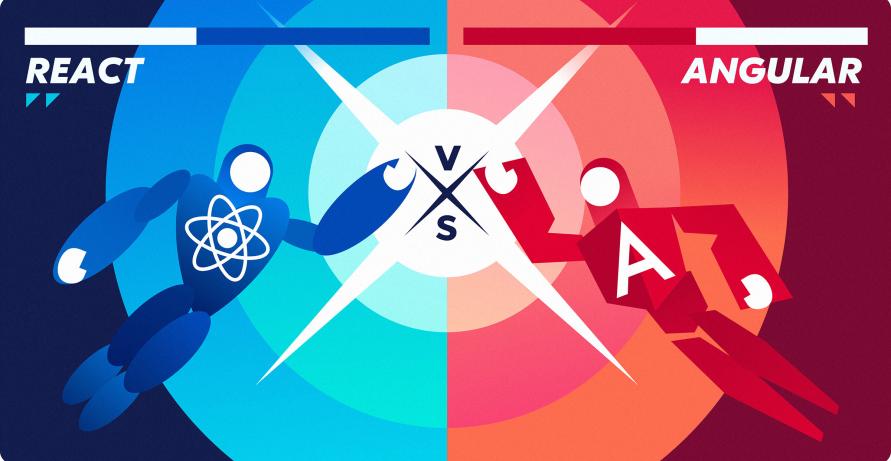
React Vs Angular, What's best?
Perfect 👍 I’ll give you the clean, structured, SEO-optimized version without a table, with proper heading hierarchy, shorter paragraphs, FAQs, and Anchor Points section.
React vs Angular: What’s Best?
When building the frontend of a web application, one major question appears:
Should you choose React or Angular?
Both technologies are powerful. Both are widely adopted. And both are used in enterprise and startup environments.
However, they are fundamentally different in architecture, flexibility, and development philosophy.
Choosing the right one depends on your project goals, team expertise, scalability needs, and long-term maintenance strategy.
Let’s break it down clearly.
What Is Angular?
Angular is a full-featured, open-source frontend framework maintained by Google. It is built with TypeScript and designed for structured, scalable web applications.
It is important not to confuse Angular with AngularJS. AngularJS is no longer supported. Modern Angular refers to Angular 2+ versions.
What Angular Is Best For
Angular works well for:
- Large enterprise applications
- Government and financial platforms
- Complex dashboards
- Internal business tools
- Long-term scalable systems
Key Strengths of Angular
- Built-in routing
- Two-way data binding
- Dependency injection
- Reactive forms
- Strong CLI support
- Structured architecture
Angular provides an all-in-one development ecosystem. Most required tools are built in.
What Is React?
React is a JavaScript library created by Meta (Facebook). It focuses on building dynamic user interfaces using reusable components.
React is not a full framework. Developers combine it with other tools based on project needs.
What React Is Best For
React is ideal for:
- Interactive web applications
- SaaS platforms
- Startup MVPs
- High-performance UIs
- Mobile apps using React Native
Key Strengths of React
- Component-based architecture
- Virtual DOM for faster rendering
- One-way data binding
- Flexible ecosystem
- Large developer community
- Easier learning curve
React provides flexibility. You choose the tools and structure.
Core Differences Between React and Angular
Although both follow a component-based approach, their design philosophy differs.
1. Framework vs Library
Angular is a complete framework.
React is a UI library.
Angular includes built-in tools for routing, state management, and HTTP handling.
React requires additional libraries like React Router or Redux.
2. Language
Angular uses TypeScript by default.
React uses JavaScript with JSX.
TypeScript adds structure and type safety.
React keeps things simpler at the start.
3. Data Binding
Angular uses two-way data binding.
Changes in the model update the view automatically and vice versa.
React uses one-way data binding.
Data flows from parent to child components.
4. Learning Curve
Angular has a steeper learning curve due to:
- TypeScript
- Modules
- Decorators
- Dependency injection
React is easier to begin with but requires architectural decisions as projects grow.
5. Performance
React uses a Virtual DOM, which updates only changed elements.
Angular uses change detection and Ahead-of-Time (AoT) compilation.
Both perform well, but React often feels faster in highly dynamic applications.
When Should You Choose Angular?
Choose Angular if:
- You are building enterprise-grade software
- You want a structured development approach
- You need built-in solutions
- Your team is comfortable with TypeScript
- Governance and long-term maintainability are priorities
Angular is commonly used in healthcare, finance, and government systems.
When Should You Choose React?
Choose React if:
- You need faster development
- You prefer flexibility
- You are building modern SaaS applications
- You want strong UI performance
- You plan to expand to mobile using React Native
React is very popular among startups and product-driven companies.
Career Opportunities
Both React and Angular skills are highly valuable.
Common job roles include:
- Frontend Developer
- Full-Stack Developer
- UI Engineer
- React Native Developer
- Technical Lead
- Software Architect
React currently has wider global adoption.
Angular remains strong in enterprise hiring.
So, Which One Is Better?
There is no universal winner.
React offers flexibility and speed.
Angular offers structure and built-in power.
The best choice depends on:
- Project complexity
- Budget
- Timeline
- Team skill set
- Long-term growth strategy
Technology decisions should support business goals, not trends.
How Anchor Points Can Help
At Anchor Points, we help organizations select the right frontend architecture based on scalability, performance, and long-term ROI.
Our services include:
- React and Next.js development
- Enterprise Angular application development
- Headless CMS architecture
- API-first web application design
- Performance optimization
- Cloud-native deployment
We don’t just build applications. We design scalable digital ecosystems aligned with your business objectives.
Final Takeaways
React and Angular are both powerful frontend technologies.
Choose React for flexibility and rapid UI development.
Choose Angular for enterprise-grade structure and built-in capabilities.
The right choice depends on your strategic goals.
FAQs
1. Is React better than Angular?
Not necessarily. React is more flexible. Angular is more structured. The better option depends on your project.
2. Which is easier to learn?
React is generally easier for beginners. Angular requires understanding TypeScript and framework architecture.
3. Is Angular still relevant in 2026?
Yes. Angular remains widely used in enterprise applications and is actively maintained by Google.
4. Which has better performance?
Both are fast. React often feels faster in dynamic applications due to Virtual DOM.
5. Can businesses switch between React and Angular?
Yes, but migration requires architectural planning and redevelopment effort.