Digital Healthcare Trends in 2026: Technologies Transforming Patient Care
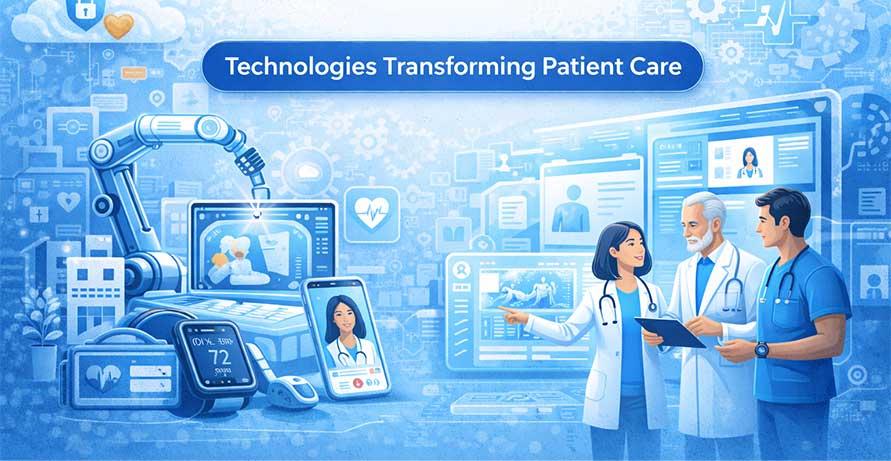
Healthcare is experiencing one of the largest digital shifts in its history. By 2026, technology is not just supporting hospitals and clinics. It is actively shaping how patient care is delivered, accessed, and experienced.
From artificial intelligence in diagnostics to cloud-based healthcare platforms and remote patient monitoring, digital innovation is transforming clinical workflows and patient engagement.
This article explores the most important digital healthcare trends in 2026 and explains how healthcare organizations can prepare for a connected, secure, and data-driven future.
Digital Transformation Is Now Central to Healthcare Strategy
Healthcare organizations once treated digital tools as secondary systems. In 2026, digital strategy sits at the core of patient care and operational efficiency.
Hospitals and clinics face:
- Rising operational costs
- Workforce shortages
- Increasing regulatory compliance demands
- Higher patient expectations
Digital transformation helps solve these challenges by:
- Improving care coordination
- Reducing administrative workload
- Enhancing patient access
- Supporting data-driven decisions
Organizations that delay modernization risk falling behind in patient satisfaction and clinical outcomes.
Artificial Intelligence Improves Clinical Decision Making
Artificial intelligence is now part of daily healthcare operations. It supports clinicians by enhancing decision making rather than replacing it.
Key AI Applications in 2026
- AI-powered diagnostic imaging
- Clinical decision support systems
- Predictive analytics for patient risk
- Automated medical documentation
- Population health forecasting
AI helps identify patterns earlier, reduce medical errors, and improve treatment accuracy. It also increases efficiency by optimizing scheduling and resource planning.
Telehealth Becomes a Hybrid Care Model
Telehealth is no longer a temporary solution. In 2026, it forms part of hybrid care models that combine virtual and in-person visits.
Benefits of Hybrid Healthcare
- Reduced wait times
- Greater access to specialists
- Better chronic disease management
- Flexible appointment options
Virtual consultations, digital triage, and remote follow-ups improve access while maintaining care quality.
Interoperability and Health Data Integration Are Essential
Healthcare data fragmentation remains a major challenge. In 2026, interoperability is mandatory.
Healthcare providers now prioritize:
- Electronic health record integration
- Secure health information exchange
- API-driven healthcare systems
- Real-time patient data access
Better data integration improves clinical accuracy, reduces duplication, and supports coordinated care across providers.
Patient Experience Drives Digital Strategy
Patients expect healthcare experiences similar to other digital services they use daily.
Digital Tools That Improve Patient Experience
- User-friendly patient portals
- Online scheduling systems
- Secure messaging platforms
- Personalized health dashboards
Strong digital patient engagement improves satisfaction, adherence to treatment plans, and long-term trust.
Remote Patient Monitoring Expands Preventive Care
Remote patient monitoring uses wearable devices and connected health sensors to track patient health outside clinical settings.
Benefits of Remote Monitoring
- Early detection of health risks
- Reduced hospital readmissions
- Continuous chronic disease management
- Improved preventive care
Proactive monitoring supports better outcomes and lowers long-term healthcare costs.
Cloud-Based Healthcare Platforms Increase Scalability
Cloud computing is a foundation of modern healthcare IT infrastructure.
Why Cloud Adoption Matters
- Scalable data storage
- Secure remote access
- Improved disaster recovery
- Cost-effective system upgrades
Cloud-native healthcare systems enable innovation while maintaining compliance with data privacy regulations.
Cybersecurity and Data Privacy Take Priority
As digital healthcare grows, cybersecurity risks increase. Healthcare organizations manage sensitive patient data that attracts cyber threats.
Key security priorities include:
- Identity and access management
- Data encryption
- Threat detection and monitoring
- Incident response planning
Strong cybersecurity protects patient trust and ensures regulatory compliance.
Accessibility and Digital Inclusion Improve Health Equity
Healthcare technology must serve diverse populations. In 2026, accessibility is a core design requirement.
Digital platforms should support:
- Multilingual access
- Assistive technologies
- Mobile-first design
- Clear, simple interfaces
Inclusive digital health systems improve equity and patient outcomes.
Automation Reduces Administrative Work
Healthcare staff spend significant time on non-clinical tasks. Automation helps reduce this burden.
Processes Commonly Automated
- Appointment scheduling
- Billing workflows
- Insurance verification
- Reporting and compliance documentation
Automation improves efficiency while allowing providers to focus on patient care.
Data-Driven Population Health Management Expands
Healthcare organizations use predictive analytics to manage population health more effectively.
Benefits of Data Analytics in Healthcare
- Identifying at-risk patients
- Improving preventive care programs
- Optimizing resource allocation
- Managing chronic conditions
Data-driven insights improve outcomes while controlling costs across communities.
How Anchor Points Supports Healthcare Organizations
Anchor Points helps healthcare providers modernize digital systems securely and efficiently.
Our healthcare technology services include:
- Custom healthcare software development
- Secure web platform design
- System integration and interoperability
- Cloud migration and infrastructure optimization
- Cybersecurity and compliance support
- Automation of administrative workflows
We align technology with clinical objectives to improve patient care, operational efficiency, and long-term scalability.
Final Takeaways
Digital healthcare trends in 2026 reflect a move toward connected, patient-focused, and data-driven care.
Key technologies shaping the future include:
- Artificial intelligence
- Hybrid telehealth models
- Interoperable health systems
- Remote patient monitoring
- Cloud infrastructure
- Healthcare cybersecurity
Organizations that invest strategically in digital transformation improve outcomes, strengthen patient trust, and build resilient healthcare systems.
If your healthcare organization is preparing for digital modernization in 2026, Anchor Points can help build a secure and scalable technology roadmap.
FAQs
Q1. What are the biggest digital healthcare trends in 2026?
AI-driven diagnostics, hybrid telehealth, interoperability, remote patient monitoring, and cloud-based healthcare systems lead the transformation.
Q2. How does artificial intelligence improve patient care?
AI supports faster diagnosis, predictive analytics, and workflow automation, helping clinicians make better decisions.
Q3. Why is interoperability important in healthcare?
It allows seamless data exchange between providers, improving coordination and reducing duplicate tests.
Q4. Is telehealth still important in 2026?
Yes. Telehealth is part of hybrid care models that combine virtual and in-person services.
Q5. How can healthcare organizations prepare for digital transformation?
They should invest in scalable platforms, strong cybersecurity, system integration, and patient-centered digital experiences.