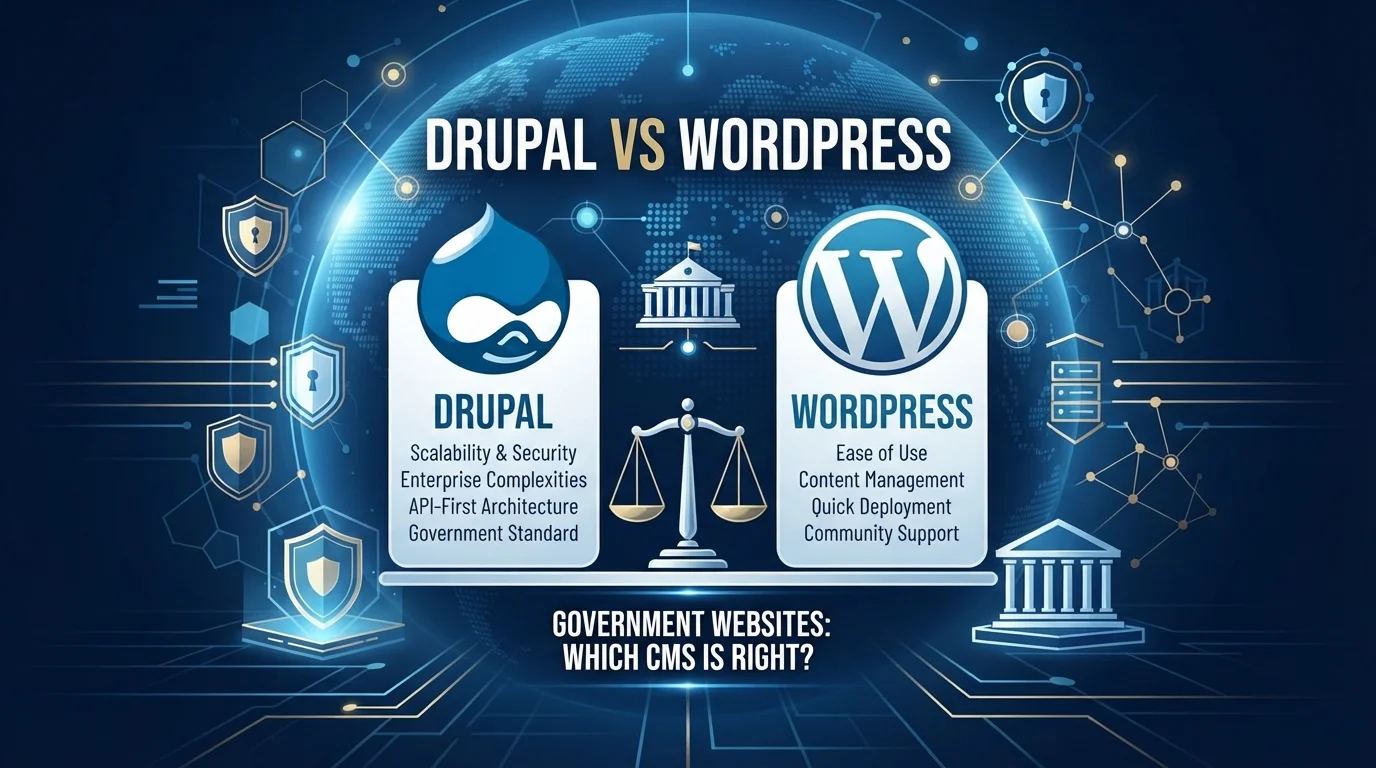
Why Healthcare Organizations Use Drupal CMS?

Healthcare organizations operate in highly regulated environments. Security, accessibility, reliability, and accuracy are critical. Their websites are not just marketing platforms. They are essential systems for patient education, appointment access, service discovery, and digital trust.
Many healthcare providers across the United States choose Drupal CMS because it offers strong security, flexible content management, accessibility compliance, and long-term scalability.
This guide explains why Drupal is a preferred CMS for healthcare and how Anchor Points helps healthcare organizations implement secure and future-ready Drupal platforms.
The Digital Requirements of Modern Healthcare
Healthcare websites must serve multiple audiences:
- Patients
- Caregivers
- Physicians
- Administrative teams
- Community members
At the same time, these platforms must meet regulatory and operational standards.
A modern healthcare website must:
- Deliver accurate medical information
- Support ADA accessibility
- Protect sensitive interactions
- Manage large content libraries
- Integrate with external systems
- Scale across locations and departments
Drupal’s architecture aligns well with these needs.
Enterprise-Level Security
Security is a primary concern in healthcare. Even if protected health information is not stored directly in the CMS, websites often connect to patient portals, appointment systems, and intake forms.
Drupal provides:
- A dedicated security team
- Frequent security updates
- Granular user permissions
- Role-based access control
- Strong audit and monitoring capabilities
These features make Drupal a trusted CMS for high-risk industries.
How Anchor Points Can Help
Anchor Points implements secure Drupal configurations, hardened hosting environments, and continuous monitoring to reduce risk and maintain compliance.
HIPAA-Aware Integrations
Healthcare websites often integrate with:
- Appointment scheduling tools
- Patient portals
- CRM systems
- Email and communication platforms
Drupal allows secure integration layers that limit data exposure.
Proper architecture ensures that sensitive data is handled correctly while maintaining functionality.
How Anchor Points Can Help
We design secure API integrations and follow best practices to support HIPAA-aware digital environments.
Accessibility and ADA Compliance
Accessibility is essential in healthcare. Websites must serve users with visual, motor, and cognitive disabilities.
Drupal supports accessibility through:
- Semantic HTML structure
- Screen reader compatibility
- Keyboard navigation
- Accessible administrative interfaces
- Ongoing community improvements
Healthcare organizations choose Drupal to reduce legal risk and ensure inclusive access.
How Anchor Points Can Help
We audit and develop Drupal websites to meet WCAG standards and ADA compliance requirements.
Managing Complex Healthcare Content
Healthcare websites often manage:
- Physician profiles
- Service pages
- Treatment information
- Medical resources
- Location-based content
- News and announcements
Drupal excels in structured content management.
It allows organizations to:
- Create custom content types
- Reuse content across pages
- Maintain editorial workflows
- Enforce approval processes
This improves governance and reduces errors.
Multisite and Multi-Location Support
Many healthcare providers operate across multiple clinics or hospitals.
Drupal supports:
- Multisite architecture
- Shared content systems
- Centralized brand control
- Location-specific customization
This ensures brand consistency while allowing local flexibility.
How Anchor Points Can Help
We build scalable multisite Drupal systems that simplify management across locations.
Performance and High Traffic Reliability
Healthcare websites must remain available during emergencies and public health announcements.
Drupal supports performance optimization through:
- Advanced caching
- CDN integration
- Scalable cloud hosting
- Traffic load management
High availability protects patient trust and brand reputation.
How Anchor Points Can Help
We optimize Drupal performance for speed, uptime, and stability during traffic spikes.
Multilingual Capabilities
Healthcare providers serve diverse populations. Clear communication in multiple languages improves patient care.
Drupal includes strong multilingual support:
- Language-specific content
- Translation workflows
- Localized navigation
- Flexible language switching
This helps organizations communicate effectively with broader communities.
Integration With Modern Healthcare Systems
Healthcare organizations rely on:
- CRM platforms
- Analytics tools
- Marketing automation
- Scheduling software
- Reporting dashboards
Drupal integrates easily through APIs and custom modules.
This flexibility allows digital modernization without replacing core systems.
Long-Term Scalability and Flexibility
Healthcare regulations and technology evolve continuously. Drupal’s open-source model provides long-term flexibility.
It supports:
- Continuous upgrades
- Headless architecture
- API-first development
- Emerging technology integration
This future readiness makes Drupal a strategic investment.
How Anchor Points Supports Healthcare Organizations
Anchor Points specializes in Drupal CMS solutions for healthcare.
Our services include:
- Drupal strategy and architecture
- Secure development and compliance alignment
- Accessibility implementation
- Performance optimization
- Multisite deployment
- Ongoing maintenance and support
We design platforms that are secure, scalable, and aligned with healthcare regulations and operational needs.
Final Thoughts
Healthcare organizations need digital platforms that are secure, accessible, reliable, and scalable.
Drupal CMS delivers:
- Strong security controls
- Accessibility compliance
- Structured content management
- Multisite scalability
- Long-term flexibility
For regulated environments, Drupal provides the control and stability required to protect patients and maintain trust.
Frequently Asked Questions
Why is Drupal widely used in healthcare?
Because it offers strong security, accessibility support, and flexibility needed in regulated industries.
Is Drupal suitable for HIPAA-aware websites?
Yes. When implemented correctly with secure integrations and architecture, Drupal can support HIPAA-aligned digital systems.
Can Drupal handle large healthcare websites?
Yes. Drupal manages complex content structures, high traffic, and multisite environments effectively.
Does Drupal support accessibility standards?
Yes. Drupal follows modern accessibility guidelines and supports WCAG compliance.
How does Anchor Points help healthcare organizations with Drupal?
We provide end-to-end Drupal services including strategy, development, security hardening, optimization, and long-term support.