
Custom Software vs Off-the-Shelf Solutions: A 2026 Decision Guide
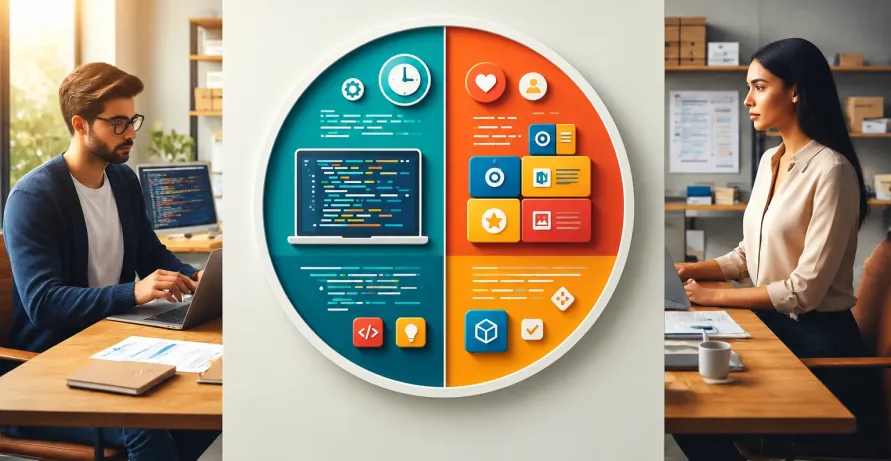
In 2026, choosing between custom software and off-the-shelf solutions is no longer a purely technical decision. It is a strategic business choice that affects scalability, operational efficiency, security, and long-term cost. While packaged software offers speed and lower upfront investment, it often limits flexibility as organizations grow. Custom software, when built correctly, aligns technology with business strategy and supports long-term competitive advantage.
This guide helps business leaders understand when custom software makes sense, when off-the-shelf tools are sufficient, and how to make the right decision based on growth, complexity, and risk.
Understanding the Two Approaches
What Are Off-the-Shelf Software Solutions
Off-the-shelf software refers to ready-made applications designed to serve a broad audience. These solutions are typically subscription-based and include common features needed by many businesses.
Examples include CRM platforms, accounting tools, project management software, and standard e-commerce systems.
Off-the-shelf software is attractive because it can be deployed quickly, requires minimal initial setup, and often includes vendor-managed updates and support.
What Is Custom Software
Custom software is designed and built specifically for an organization’s workflows, integrations, and business goals. Instead of adapting processes to fit the software, the software is designed to support how the business actually operates.
Custom solutions are commonly used for internal platforms, enterprise systems, customer portals, and applications where differentiation, scalability, or integration complexity matters.
Key Decision Factors in 2026
1. Business Complexity and Differentiation
If your business processes are standard and unlikely to change, off-the-shelf tools may be sufficient. However, when processes create competitive advantage, packaged software often becomes restrictive.
Custom software allows organizations to preserve unique workflows rather than compromise them. In competitive markets, this flexibility often translates directly into efficiency and differentiation.
2. Scalability and Long-Term Growth
Off-the-shelf solutions are built to scale for average use cases. As organizations grow, limitations emerge in performance, customization, data handling, or pricing.
Custom software is designed with growth assumptions from the start. Architecture, infrastructure, and data models can be aligned with expected scale rather than imposed constraints.
This becomes especially important for enterprises and fast-growing companies.
3. Integration Requirements
Modern organizations rely on multiple systems such as ERP, CRM, analytics platforms, and third-party services. Off-the-shelf tools often provide limited or rigid integrations.
Custom software enables deep, reliable integrations that reflect real operational needs. This reduces manual work, data inconsistencies, and operational risk.
4. Security and Compliance
Packaged software follows general security standards but may not meet specific regulatory or internal security requirements. Organizations operating in healthcare, finance, education, or regulated industries often face this challenge.
Custom software allows security and compliance requirements to be built directly into the system design. This includes access controls, audit trails, data residency, and compliance workflows.
5. Total Cost of Ownership
Off-the-shelf solutions appear cheaper initially, but long-term costs often increase through licensing fees, user limits, add-ons, and workarounds.
Custom software typically requires higher upfront investment but offers predictable long-term costs and avoids recurring licensing escalation. Over time, total cost of ownership may be lower when efficiency gains and reduced dependency are considered.
When Off-the-Shelf Software Makes Sense
Off-the-shelf solutions are a good choice when:
- Business processes are standard and unlikely to change
- Speed of deployment is critical
- Budget constraints are significant
- Integration requirements are minimal
- Scalability needs are moderate
For early-stage organizations or teams validating processes, packaged software can be a practical starting point.
When Custom Software Is the Better Choice
Custom software is often the better option when:
- Business workflows are unique or complex
- Integration with multiple systems is required
- Scalability and performance are critical
- Security and compliance requirements are strict
- Software supports core revenue or operations
In these cases, custom solutions reduce friction, improve efficiency, and support long-term growth.
A Common 2026 Hybrid Approach
Many organizations adopt a hybrid strategy. They use off-the-shelf tools for commodity functions such as email or accounting, while investing in custom software for core operations.
This approach balances speed and flexibility while ensuring critical systems are designed for the business rather than forcing the business to adapt.
Decision Framework for Business Leaders
Before deciding, ask:
- Is this software supporting a core business function
- Will our needs change significantly in the next three to five years
- Do we require deep integrations
- Are security and compliance critical
- What is the long-term cost, not just the initial price
Clear answers to these questions usually make the decision obvious.
How Anchor Points Helps Businesses Choose the Right Path
At Anchor Points, we help organizations evaluate whether custom software or off-the-shelf solutions best support their goals. We focus on understanding operational complexity, growth plans, and risk exposure before recommending an approach.
Our teams deliver Web Application Development Services and Custom Software Development that align technology with business strategy. Whether modernizing existing systems or building new platforms, we ensure decisions are scalable, secure, and cost-effective.
Final Thoughts
In 2026, the choice between custom software and off-the-shelf solutions is not about technology preference. It is about strategic fit.
Organizations that evaluate scalability, integration, security, and long-term cost make better decisions and avoid costly rework. With the right approach, software becomes an asset that supports growth rather than a constraint.
If you are evaluating custom software or packaged solutions, contact Anchor Points for expert guidance tailored to your business.
FAQs
Is custom software always more expensive than off-the-shelf solutions
Not always. While upfront costs are higher, long-term ownership costs can be lower depending on scale and usage.
Can businesses switch from off-the-shelf to custom software later
Yes. Many organizations start with packaged tools and migrate to custom solutions as complexity increases.
How long does custom software development take
Timelines vary based on scope and integrations. Projects typically range from a few months to a year.
Do off-the-shelf tools scale for enterprise use
Some do, but many impose limitations that become costly or restrictive at scale.